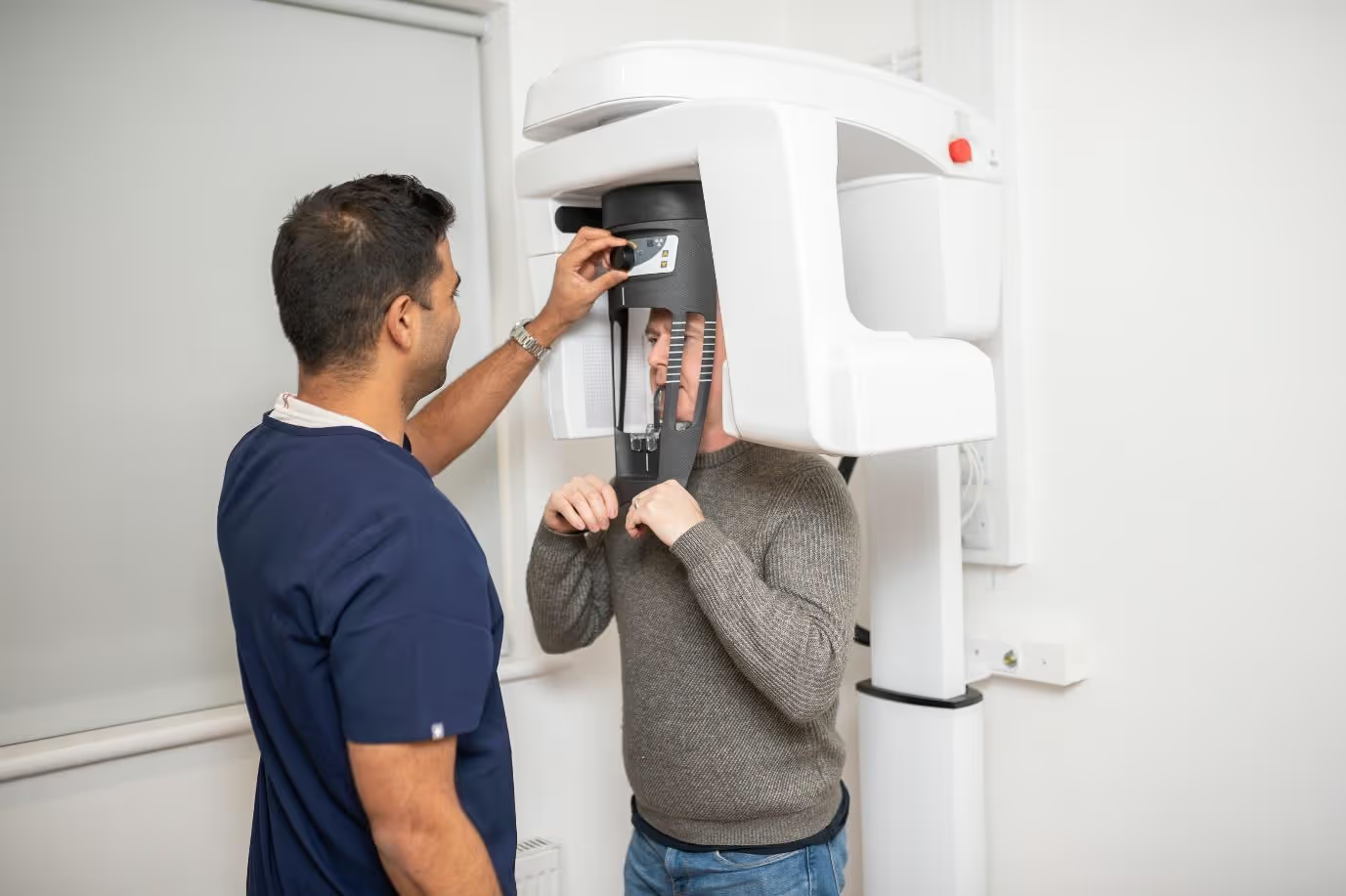
A dental implant replaces the root of a missing tooth. How implant treatment works at Dental Wellness Mill Hill, who it suits, the stages and aftercare.
Losing a tooth affects more than appearance. Chewing on one side, food trapping in the gap and neighbouring teeth slowly drifting are all common complaints. A dental implant is one way to replace a missing tooth, and it is a treatment we provide at our practice on The Broadway in Mill Hill.
An implant is a small post, usually made of titanium, placed in the jawbone where the root of the tooth used to be. Over a few months the bone bonds to its surface, a process called osseointegration. A connector called an abutment is then attached, and a crown, bridge or denture is fixed on top.
Implants need healthy gums and enough bone to support them. Smoking, poorly controlled diabetes, some medicines and a history of gum disease can increase the risk of problems, though they don't always rule implants out. Where bone has shrunk, grafting or a sinus lift may be possible. Bridges and dentures remain good alternatives for many people, and we will explain how they compare.
Implant treatment at Dental Wellness Mill Hill is provided by dentists including Dr Jay Doshi, our principal dentist and implant surgeon, and Dr Stephen Franks. You will meet the clinician planning your care at your consultation.
Implants can't decay, but the gum and bone around them can become inflamed in a similar way to gum disease, a condition called peri-implantitis. Daily cleaning around the implant, regular hygiene visits and not smoking all help. Crowns and bridges on implants can also wear or chip over time and may eventually need replacing.
We are at 46 The Broadway, Mill Hill NW7 3LH, a short walk from Mill Hill Broadway station, with patients travelling from Mill Hill East, Totteridge, Arkley and the Edgware Way area. Call 020 3930 4900, email smile@dentalwellnessmillhill.co.uk or book online.
You can find more on our dental implants page.


