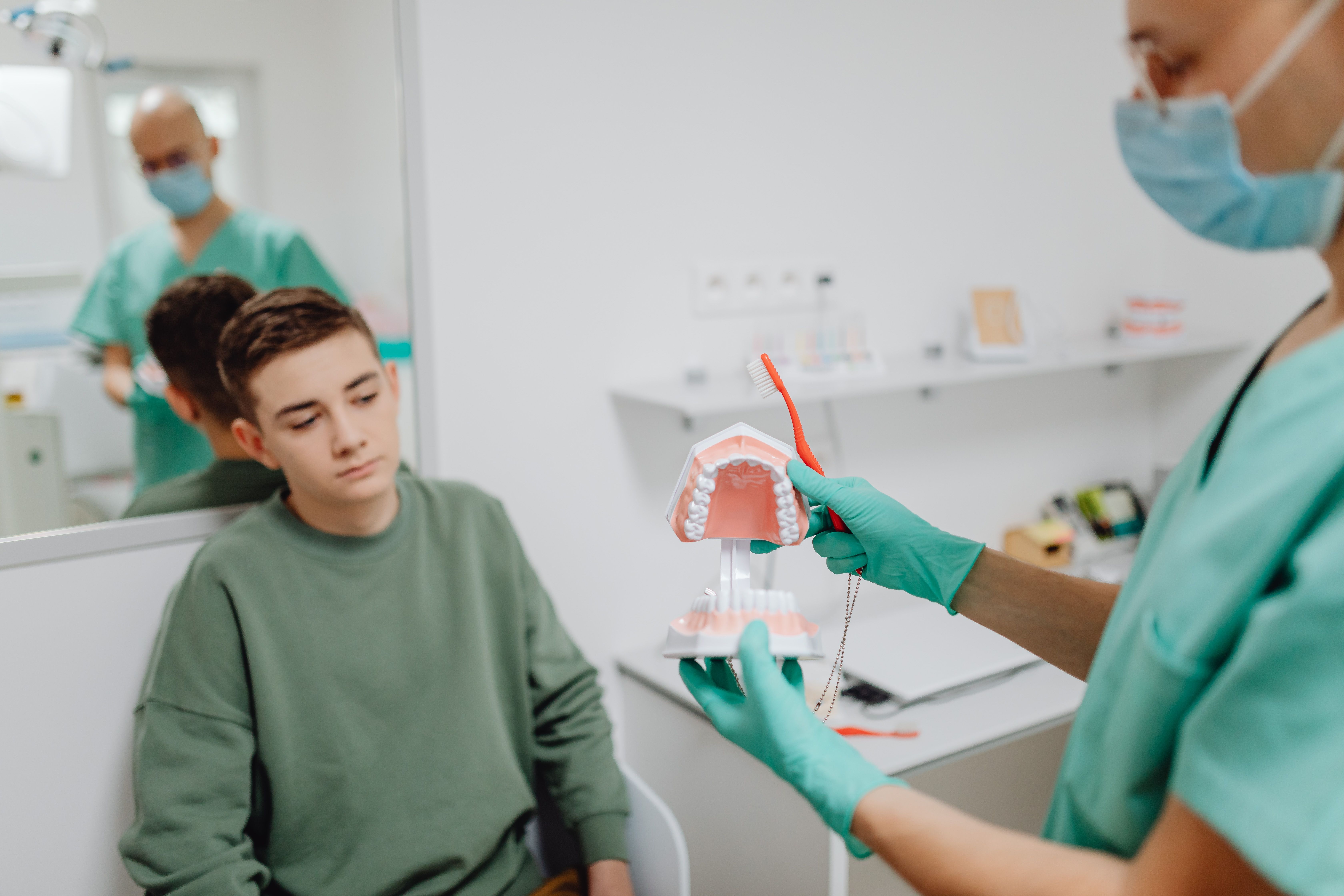
Waking up with a sore jaw, a dull headache, or teeth that feel strangely worn down — most people grinding their teeth at night have no idea they're doing it until the damage shows up in the mirror or a partner mentions the noise. Bruxism is one of the most common dental issues we see, and one of the most overlooked. Here's what's actually behind it, from the team at Dental Wellness Mill Hill.
A wear-and-tear guide from the team at Dental Wellness Mill Hill
Q: What is bruxism, exactly?
A: Bruxism is the medical term for grinding or clenching your teeth, most often during sleep, though some people do it unconsciously during the day too. It's involuntary — nobody chooses to do it — which is exactly why it goes unnoticed for so long. Most patients only find out because we spot the wear pattern during a routine check-up, or because a partner has mentioned hearing it at night.
Q: How do I know if I'm grinding my teeth?
A: The most reliable signs are a jaw that feels tight or sore first thing in the morning, headaches that seem to start at the temples, teeth that look flatter or shorter than they used to, and increased sensitivity to hot or cold. Some patients also notice small chips appearing on the edges of their teeth for no obvious reason, or a partner telling them they've heard grinding sounds overnight.
If any of that sounds familiar, it's worth flagging at your next visit to Dental Wellness Mill Hill, since we can usually confirm it just by looking at the wear pattern on your teeth.
Q: What actually causes it?
A: Stress and anxiety are the most common triggers, which is why many patients notice it flares up during particularly demanding periods at work or in life generally. It can also be linked to an uneven bite, sleep disorders such as sleep apnoea, or as a side effect of certain medications. In some cases there's no single obvious cause, and it's simply how someone's body responds to tension.
Q: Is it actually doing damage, or is it just annoying?
A: It can do real damage over time, which is why it's worth taking seriously rather than dismissing as a minor habit. Grinding wears down enamel far faster than normal chewing, which can lead to increased sensitivity, flattened or chipped teeth, and in more advanced cases, cracked teeth or failing fillings and crowns that have to be replaced more often than they should. It can also strain the jaw joint itself, sometimes leading to ongoing jaw pain or clicking.
Q: What can actually be done about it?
A: The most common and effective solution is a custom-fitted night guard, worn while you sleep. It creates a barrier between your upper and lower teeth, so even if the grinding continues, the force is absorbed by the guard rather than wearing down your enamel. Unlike the generic guards sold in pharmacies, one made specifically for your bite fits properly and is far more comfortable to sleep in.
If stress is a clear trigger, addressing that side of things — whether through relaxation techniques, better sleep habits, or simply less demanding evenings where possible — can help reduce how often it happens too.
Q: Will a night guard fix the problem completely?
A: It won't stop the underlying grinding, but it protects your teeth from the consequences of it, which for most patients is the part that actually matters day to day. Think of it as damage prevention rather than a cure. For some patients, especially where an uneven bite is contributing, additional treatment to adjust the bite itself can help reduce the grinding at the source.
Q: Can children grind their teeth too?
A: Yes, and it's actually fairly common in children, often linked to teething, an evolving bite as adult teeth come through, or general stress. In most cases it resolves on its own as the permanent teeth settle in, but it's worth mentioning at their check-ups at Dental Wellness Mill Hill so we can keep an eye on any wear and intervene if it looks like it's causing lasting damage.
Q: When should I actually get this looked at?
A: If you're waking up with jaw pain or headaches regularly, if you've noticed visible wear or chipping on your teeth, or if a partner has told you they can hear grinding at night, it's worth booking in. The earlier we catch it, the less repair work is usually needed, and a night guard is a straightforward, comfortable fix once we know it's happening.
If you suspect you might be grinding your teeth, the team at Dental Wellness Mill Hill can check the wear pattern, talk through what might be triggering it, and get you fitted for a custom night guard if that's the right next step.
Book online, call us on +44 20 3930 4900, or pop in and speak to our reception team.
Want more practical dental advice? Visit our YouTube channel for patient testimonials, treatment walkthroughs, and expert tips from the team at Dental Wellness.


.avif)

